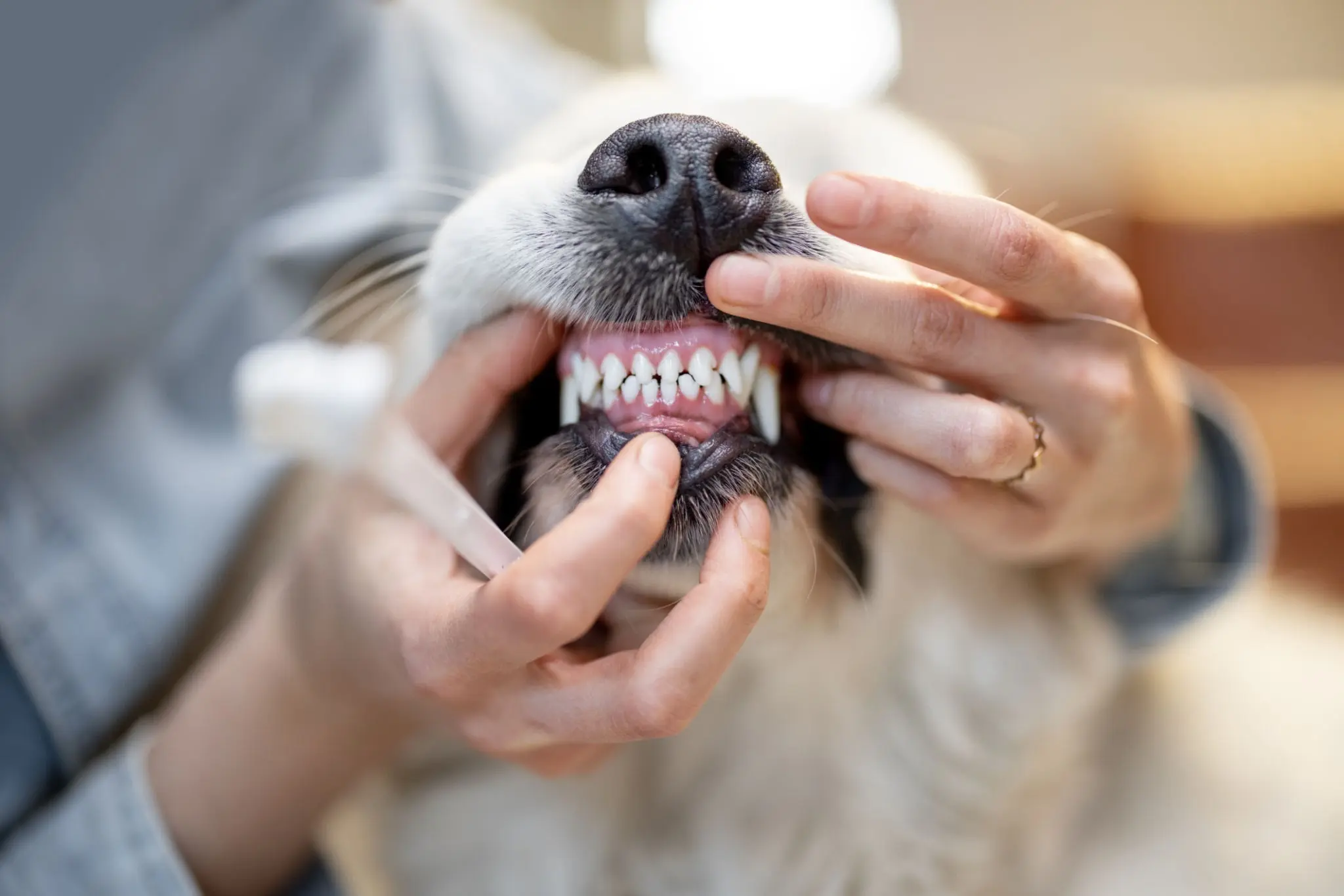
Signs your pet may have dental disease
Cats in particular hide oral pain well. A cat that is quieter than usual or eating more slowly deserves a mouth exam.
- Persistent bad breath
- Yellow or brown tartar along the gumline
- Red, swollen or bleeding gums
- Dropping food, chewing on one side or losing interest in hard food
- Pawing at the mouth, facial swelling or drooling
What happens during a professional dental cleaning
A thorough cleaning mirrors human dental care, with a few differences: pets must be under general anesthesia so the team can clean beneath the gumline, where disease actually lives.
- Pre-anesthetic exam and, commonly, bloodwork
- Anesthesia with monitoring of heart rate, oxygen and blood pressure
- Scaling above and below the gumline, then polishing
- Dental X-rays where available, since much of each tooth sits below the gums
- Treatment or extraction of damaged teeth, with pain control
Why anesthesia-free cleanings are not equivalent
Scraping tartar from visible surfaces on an awake pet does not address disease under the gumline and can leave the false impression of a healthy mouth. Major veterinary dental organizations recommend cleanings under anesthesia with a protected airway.
Home dental care
Daily tooth brushing with pet-safe toothpaste is the single most effective habit. Dental chews and diets carrying the Veterinary Oral Health Council seal can help, but they supplement brushing and do not replace professional care. Never use human toothpaste.
How often does a pet need a cleaning?
There is no universal interval. Small breeds and flat-faced dogs often need attention earlier, as do cats with gum disease. Your veterinarian will assess the mouth at each wellness exam and recommend timing.
Clinics near Willow Glen that list this service
Lincoln Avenue Veterinary Clinic
699 Lincoln Ave, San Jose, CA
Based on the services each clinic lists. Confirm availability with the clinic. All veterinary services.
Clinic information last verified: . Some details are still being confirmed with each clinic.
Frequently asked questions
Is anesthesia risky for my pet?
Every anesthetic carries some risk, but pre-anesthetic screening, individualized drug choices and continuous monitoring make dental procedures routine at well-equipped clinics. Untreated dental infection has its own risks.
Will my pet need extractions?
Only teeth that are loose, fractured or diseased are extracted. Your veterinarian should discuss options and costs with you, ideally before the procedure.
How long is recovery?
Most pets are back to normal by the next day, and those with extractions may need soft food for a week or two.
Related guides
This page is general educational information for pet owners and is not a substitute for advice from your veterinarian. Content last reviewed October 20, 2026.